Life sciences marketers list their products and services on sites such as Biocompare in order to generate qualified leads that convert to customers. Biocompare, which attracts 2.6 million motivated scientists and researchers annually, generates thousands of sales opportunities for life sciences manufacturers and suppliers that turn into high-conversation, sales-ready leads.
What happens next with those leads, and others, depends a lot on your lead management strategies. Unfortunately, too many marketers are slow to respond to leads or they respond inadequately or not at all. This results in potential customers going to competitors and marketing investments wasted.
We strongly encourage marketers to establish solid lead follow-up and lead management processes to win business from qualified leads and achieve a return on your marketing investment.
- Source of lead. The source of a lead is often a good indicator of its quality. Leads from Biocompare’s product directory have already narrowed down their selection of which supplier(s) they want to engage with, have clicked on “Get a Quote” or “Request More Information,” completed and submitted a form, and been processed and qualified by the Biocompare team. In other words, these leads are sales-ready and should not be bundled with leads generated from demand-gen activities that are higher in the funnel, such as content downloads or webinar leads.
- Information collected on the lead. The more information you have about a lead, the better you can engage with them in a relevant manner and help them along their buying journey. A completed submission form might include name, company, product interest area, buying time frame, etc. This data can be augmented with outside sources, such as papers published to understand your prospect’s research areas, or grants awarded to get a sense of funding available, which can change a lead’s score and help with pre-call sales planning. Biocompare’s partnership with Facten allows us to offer data enrichment services that can augment the information that comes in from your leads.
- Lead activity. Has this lead engaged with your company in the past? Have they downloaded content or attended a webinar or subscribed to an email? If so, they likely get a higher score.
2. Match Lead Source to Stage of Buy Cycle
Which lead is closer to making a buying decision, one that came from a “Request a Quote” submission or one from a white paper download? Obviously the former lead is on the verge of a decision, while the latter lead is earlier in their buy cycle, perhaps only exploring needs and possibilities.
Matching sales leads to their buy cycle stage can help you score leads more accurately, and moreover, can provide insight on how to respond appropriately. A comprehensive study commissioned by Biocompare, “Dynamics of the Buying Journey: Trends in Adopting R&D Products & Systems,” by Martin Akel & Associates, maps the information resources that scientists most rely on during each phase of their buying journey, as is illustrated in the table below.
Although the phases and associated content are not exclusive buckets, they do align with the scientist’s buying journey. The chart below provides hints as to what buying journey phase a lead might be in when you first become aware of them. Use this information to help plan an appropriate response.

[caption] Knowing what content a lead has accessed can give you clues to where they are in their buying journey and can help you respond appropriately.
3. Time Your Response
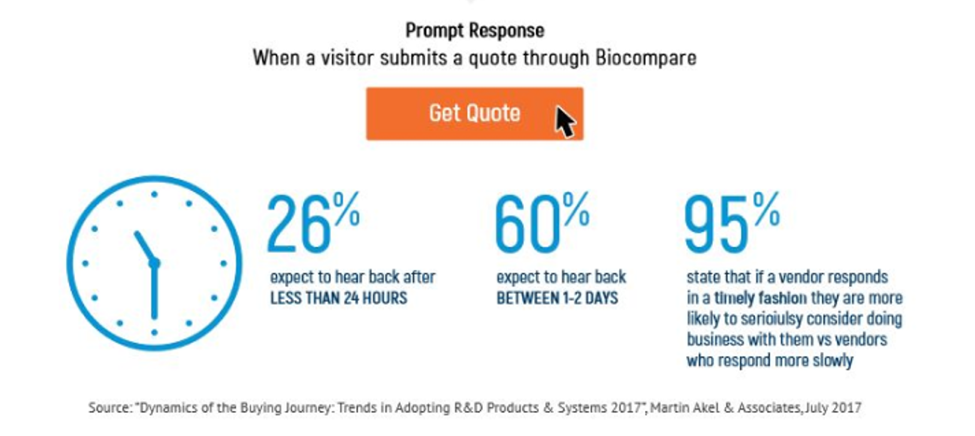
You know the proverb “Timing is Everything.” It’s especially true when responding to leads. Biocompare research has shown that companies that followed up in a timely manner had a 75 percent increase in lead conversion to a sale versus those that did not.
What constitutes a timely manner? Consider that we’re living and working in internet time and that people expect fast responses to their inquiries or they will move on to another company that seems more interested in meeting their needs.
Score leads, match content accessed to the buying cycle, and respond quickly and appropriately—these three key strategies can help you achieve your customer acquisition goals faster and more effectively.